Your Life Depends on People Who Haven't Slept in Days
The Shocking Truth About First Responder Fatigue
Picture this: It’s 3 AM, and a firefighter is jolted from deep sleep by the station alarm. His body floods with adrenaline as he transitions from unconsciousness to life-or-death decision-making in under two minutes. He’s racing through dark streets toward a house fire, his heart hammering, his mind struggling to catch up. By morning, he’ll have been awakened five more times. When his 24-hour shift ends, he’ll drive home in a mental fog that makes him statistically more dangerous behind the wheel than someone who’s legally drunk.
This isn’t just a story—it’s the hidden reality for millions of first responders across America. And the consequences reach into every emergency room, every 911 call, every moment when we need heroes to be at their sharpest.
Tactical Athletes and ICU doctors are very similar when it comes to our tolerance for years of chronic sleep deprivation. But tolerance does not equal immunity to its effects.
The Epidemic Hiding in Plain Sight
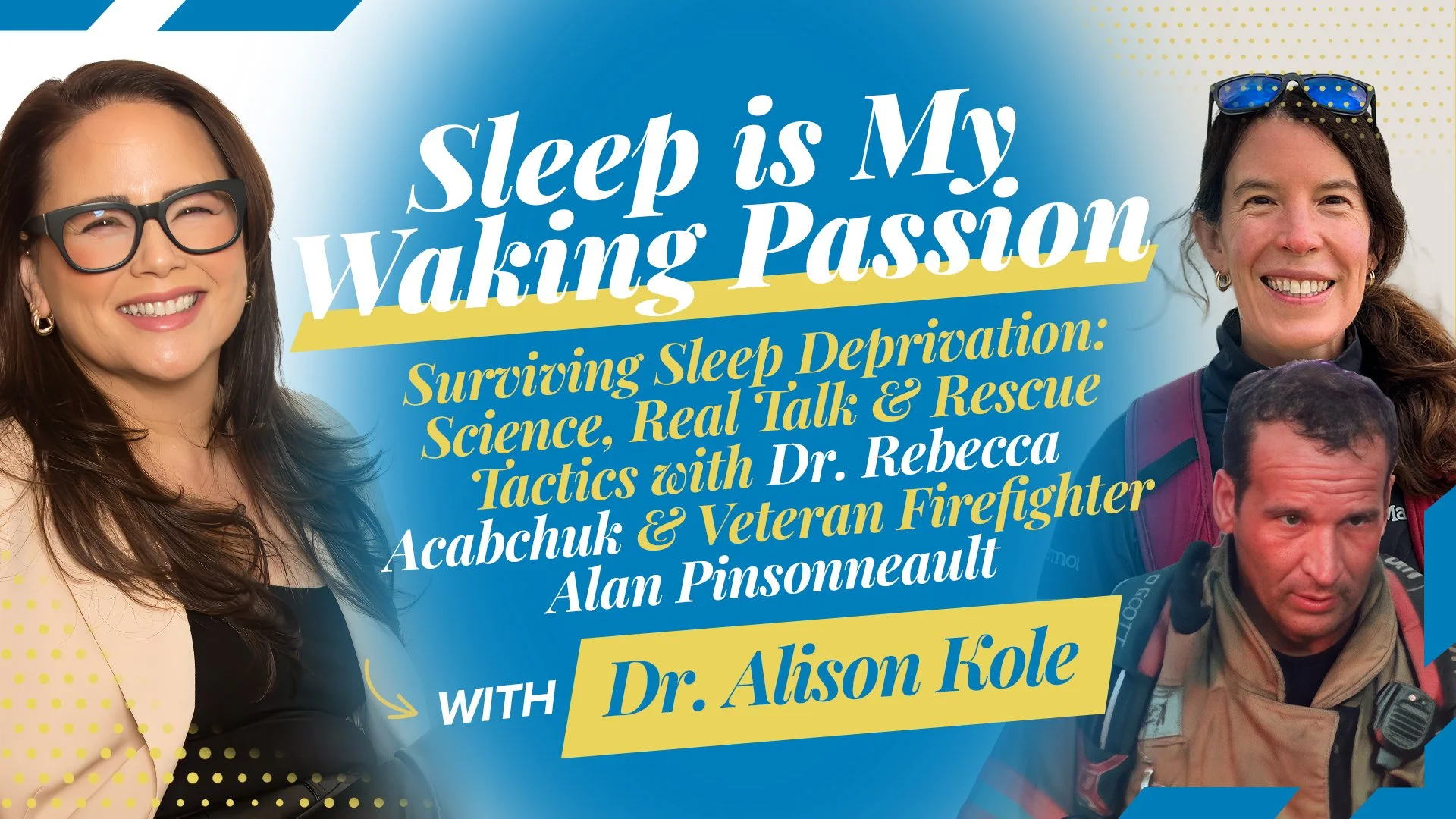
When Dr. Rebecca Acabchuk, a neuroscientist who works with what she calls “tactical athletes,” appeared on the Sleep Is My Waking Passion podcast alongside veteran firefighter Alan Pinsonneault, their conversation revealed a truth that should terrify every American: the very people whose split-second judgment and steady hands we depend on to save our lives are systematically being robbed of the sleep they need to perform at their best.
Tactical athletes—firefighters, police officers, paramedics, and other first responders—face a challenge that sets them apart from every other profession on earth. Unlike traditional athletes who know when their “game” starts and ends, tactical athletes never know when they’ll be called into action. They might be deep in REM sleep one moment and performing CPR on your child the next.
The statistics should make your blood run cold:
Nearly 30% of firefighters have undiagnosed sleep disorders.
Among those who sleep poorly, the risk of dangerous emotional exhaustion skyrockets by nearly 400%.
Sleep-deprived workers are 70% more likely to be involved in workplace accidents.
86% of all paramedic deaths happen in vehicle crashes—many related to fatigue.
When your workplace involves chainsaws, speeding ambulances, and life-saving medical procedures, these aren’t just statistics—they’re potential tragedies waiting to happen.
The Terrifying Science of Exhausted Heroes
Here’s what most people don’t realize: after just 24 hours without sleep, your brain functions as if you have a blood alcohol level of 0.1%—dangerously close to the legal limit for drunk driving. But here’s the part that should keep you awake at night: research reveals that sleep-deprived people don’t just perform worse—they become more confident in their abilities as they become more impaired.
“People’s accuracy goes down with sleep deprivation, but their confidence level in their accuracy actually goes up... What a dangerous combination—to think that we’re getting better at something when we’re actually getting worse.” – Dr. Acabchuk
Alan’s experience brings this nightmare scenario to life. Working two 24-hour shifts every eight days, he describes nights where emergency calls come non-stop: “You’re going from impossibly deep REM sleep to two minutes later you’re in a fire truck... Some nights, you never really fall asleep.” The next morning? “You go home like a zombie.”
Now imagine that “zombie” is the person you’re counting on to save your life.
When Heroes Fail: The Deadly Ripple Effects
The consequences of first responder fatigue don’t stay contained within fire stations and police departments. They spill into every corner of our lives:
Emergency Rooms: Sleep-deprived healthcare workers make 32% more mathematical errors.
On Our Roads: Officers working more than 10 hours are 90% more likely to be involved in accidents.
In Our Communities: Police officers with sleep disorders receive significantly more complaints from the public.
In Crisis Moments: Firefighters with sleep disorders are 4x more likely to experience emotional exhaustion that impairs judgment.
The economic cost? Workplace fatigue drains $136 billion annually from the U.S. economy. But the human cost is far greater.
The Hidden Heroes Fighting Back: Science Meets Street Smarts
But here’s where the story takes a hopeful turn. Dr. Acabchuk’s work with tactical athletes has uncovered simple, science-backed strategies that are saving lives—and careers.
The Two-Second Life Saver: The Strategic Sigh
A deliberate sigh activates the vagus nerve and helps transition the body into a calmer state. These micro-interventions—done at doorways, in fire trucks, or on a break—can prevent dangerous buildup of stress.
Sleep Without Sleeping: Yoga Nidra & NSDR
Yoga nidra (non-sleep deep rest) helps regulate stress and boost recovery—even when real sleep isn’t possible. Alan describes how he intuitively discovered its benefits: “I’ll just try to sit in a lazy boy with my eyes closed... and kind of just recollect and regather my thoughts.”
The Warrior’s Bedroom: Make Sleep Sacred
“Make your bed like you would at home,” says Alan. Familiar, dark, quiet sleep environments send critical cues to the brain for deeper rest.
The WIN Strategy: Mental Triage
When the mind spirals at 2 AM, Alan repeats: What’s Important Now? That question alone helps redirect the brain to the present moment.
The Bigger Truth: We’re All Tactical Athletes Now
Here’s the real kicker—this isn’t just about first responders. In today’s world, we’re all living like tactical athletes, running on empty, bracing for the next alert or crisis.
The strategies being taught to firefighters and medics are just as powerful for overwhelmed parents, overworked executives, and anyone trying to function under stress and sleep deprivation.
Alan’s final advice is simple: “Eat the healthiest you can, get as much sleep as you can when you can, and exercise when you can.”
Simple. Actionable. Life-saving.
The Wake-Up Call We All Need
If your life—or someone else’s—depends on first responders, sleep-deprived doctors, or your own ability to stay sharp under pressure, it’s time to take this issue seriously.
The solutions are here. Let’s use them.
For more sleep tips, advice, and solutions, sign up for my monthly newsletter below, where we help you get the rest you deserve!